
Air Cooled Handheld Fiber Laser Welding Machine
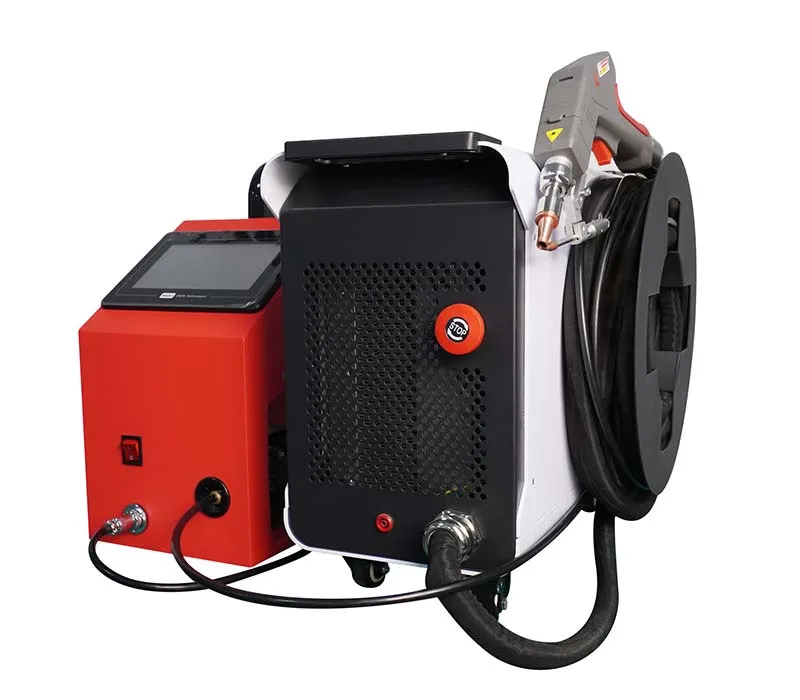
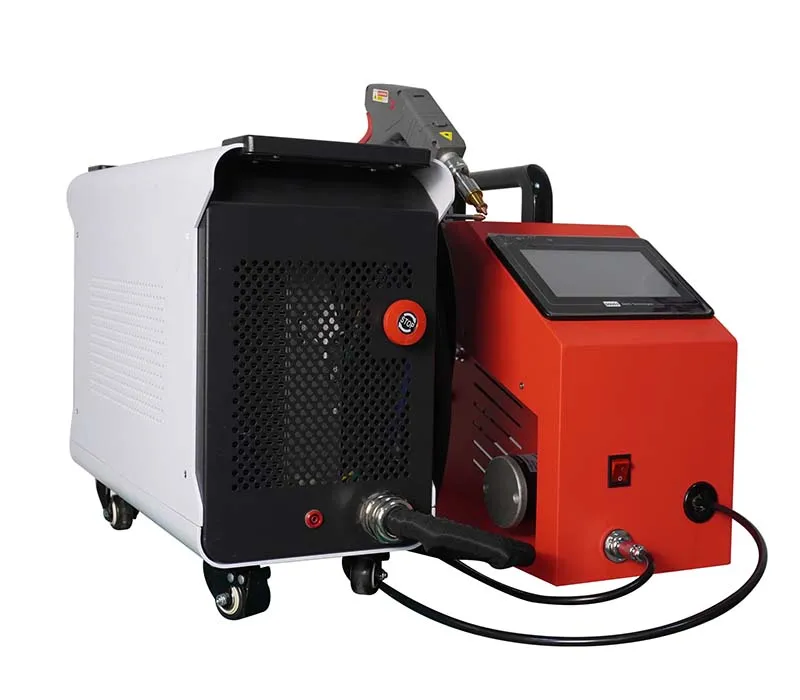
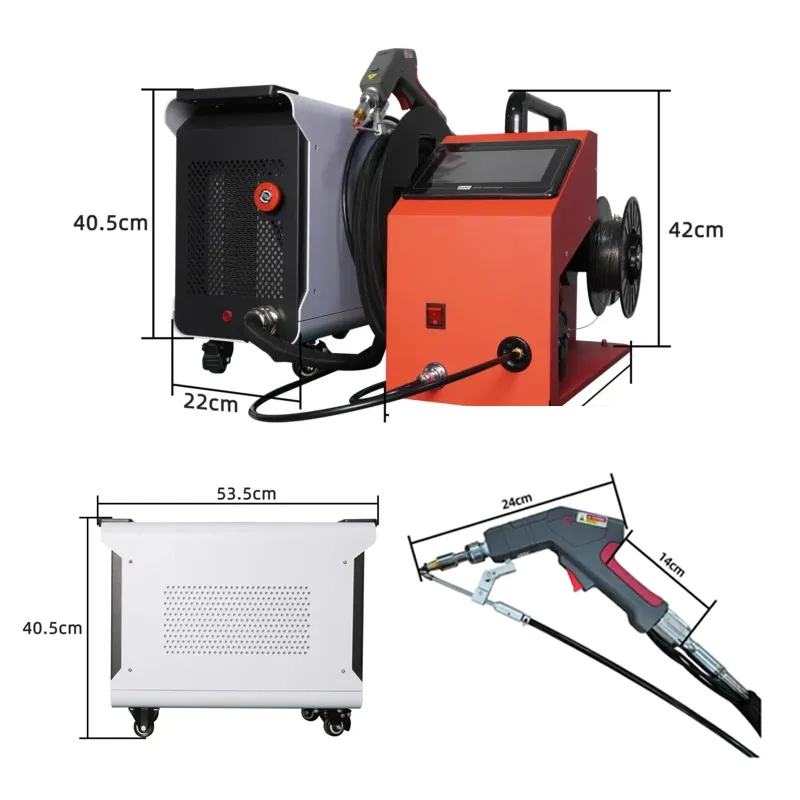
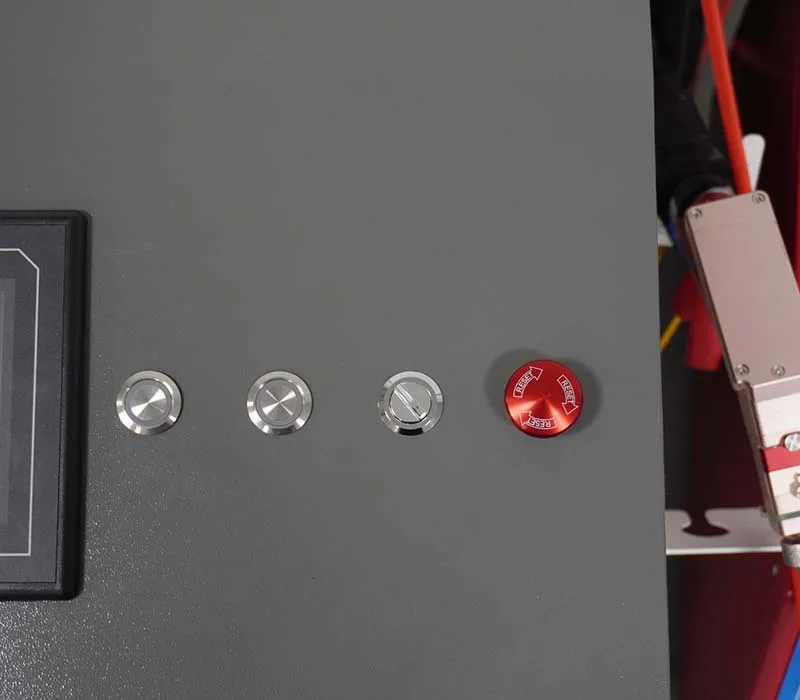
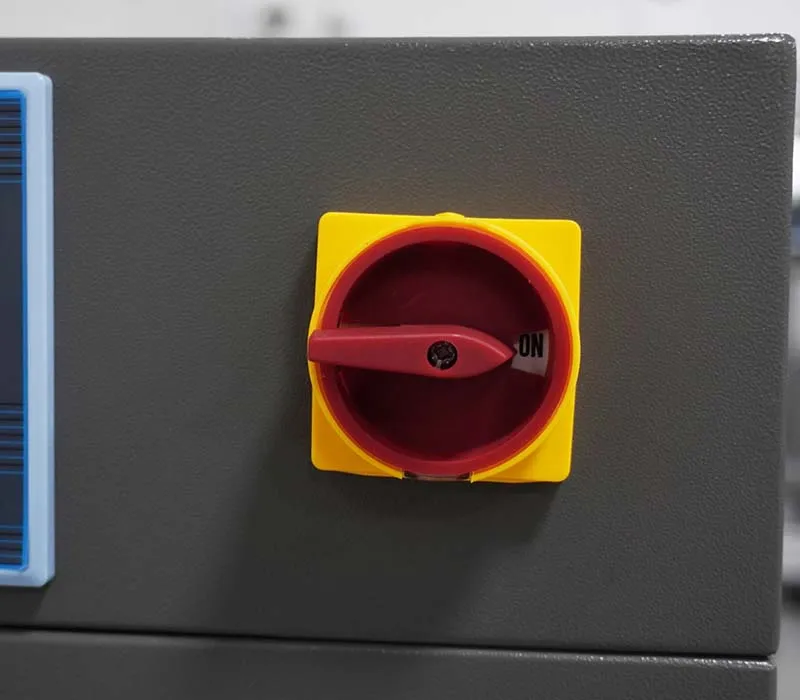
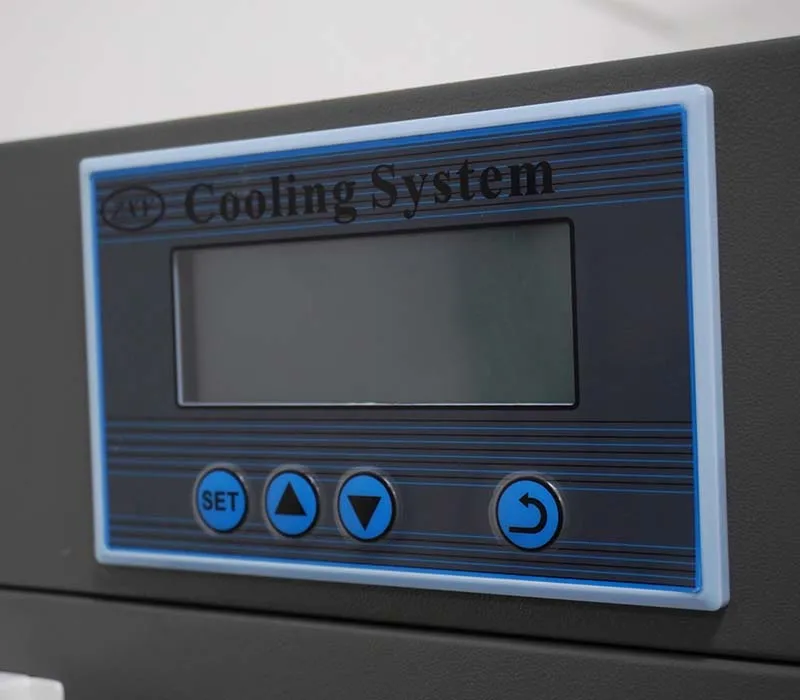
- Laser Power: 700 / 1000 / 1500 / 2000W
- Scan Width: ≤6mm
- Weld Head Weight: 660g
- Power Supply: 110V / 220V
The air-cooled handheld laser welding machine offers core advantages: efficient heat dissipation, portable flexibility, and multi-scenario adaptability. This equipment utilizes fiber laser technology, with power covering 700W-2000W, a spot diameter of ≤0.2mm, and a heat-affected zone (HAZ) of <0.5mm. The weld strength is comparable to the base material, and the surface is smooth with no oxidation. Its integrated air-cooled design reduces the equipment weight to 54kg and volume to <0.3m³, supporting single-person transport and vehicle-mounted operations, making it suitable for complex scenarios like workshops, construction sites, and outdoors. Combined with intelligent preset parameters and a human-machine interactive touch screen, novice operators can get started with just 1 hour of training. It achieves a welding speed of 2-10cm/s, boosting efficiency by over 3 times compared to traditional arc welding. It is particularly ideal for demanding fields such as automotive repair, metal processing, and construction installation, serving as a benchmark choice for industrial-grade portable welders.
Stainless steel, aluminum alloy, copper, brass, galvanized sheet, nickel-plated parts, and dissimilar metals such as copper-aluminum composites, steel-aluminum hybrid structures, etc.
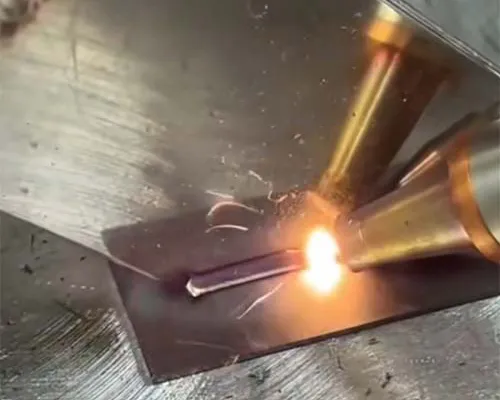
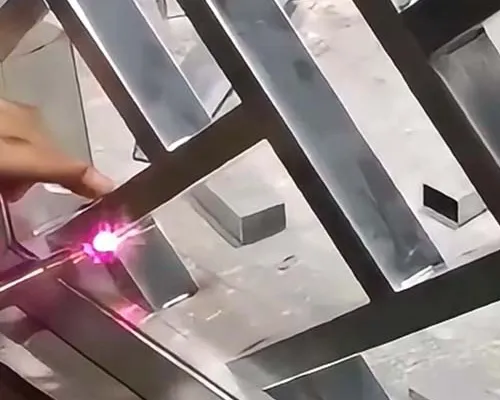
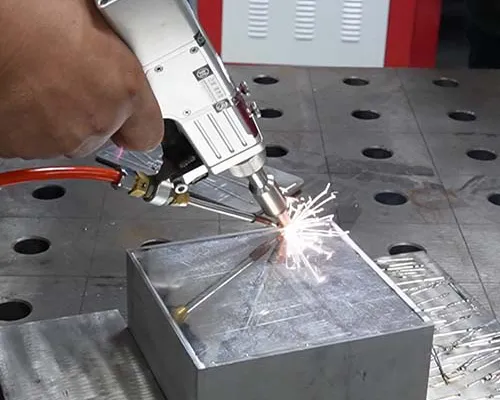
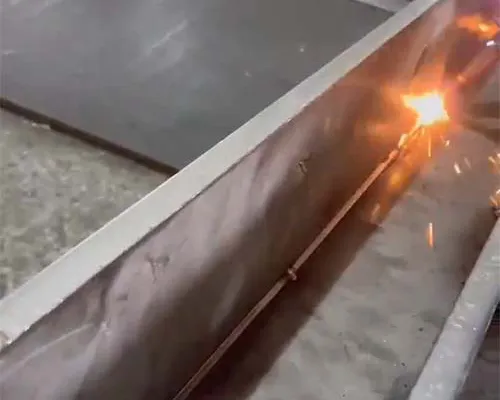
| Laser Generator | Fiber Laser |
| Laser Power | 700W/1000W/1500W/2000W |
| Welding Control System | HISPEED |
| Welding Head | HISPEED |
| Weld Head Wavelength | 1080±10nm |
| Range of Adjusting Focus | ±10mm |
| Scan Width | ≤6mm |
| Scanning Frequency | ≤300HZ |
| Laser Interface | QBH |
| Tracheal Interface | PU OD 6.0mm lD4.0mm |
| Pressure | ≤1.5 Mpa |
| Protective Gas | Nitrogen |
| Specification of Protective mirror | 18*2mm |
| Working Mode | Continuous, fish scale, interval |
| Weld Head Weight | 660g |
| Working Environment Temperature | ﹣20~+40℃ |
| Working Environment Humidity | ≤70% |
| Power supply | 110V/60Hz or 220V/50Hz |
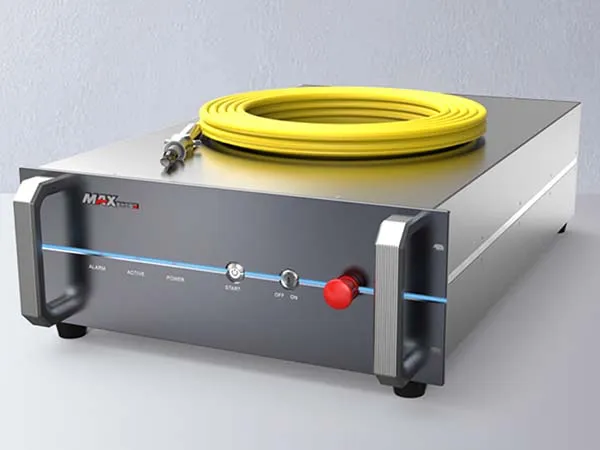
Laser source
We provide renowned domestic and international brand laser sources for our equipment, such as Raycus, JPT, MAX, SUPER, and IPG; these feature high pump conversion efficiency, low power consumption, and excellent beam quality.
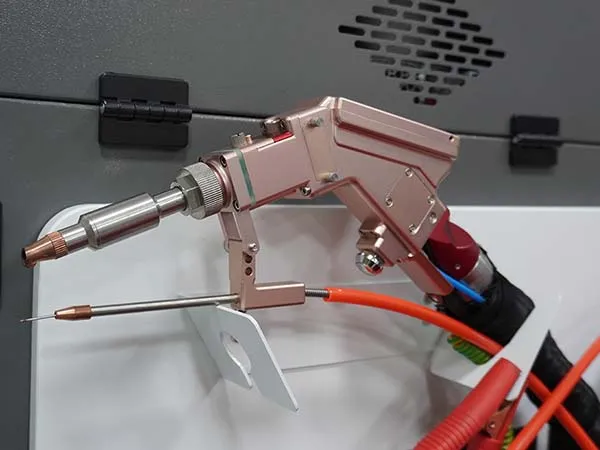
QBH handheld welding head
Supports seamless switching between welding, cleaning, and cutting modes. The gun head can rotate 360°, and coupled with replaceable gas nozzles (e.g., 30°, 60°, 90° nozzles), it easily handles complex positions like deep cavities and corners, achieving precise welding at any angle.
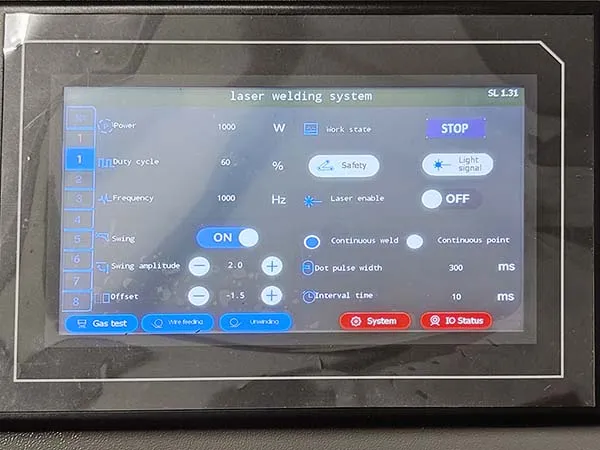
Touch screen
Provides a high-resolution display interface, supporting real-time parameter monitoring and operation feedback, ensuring precise control over key parameters such as laser power, frequency, and energy; built-in multi-language options (e.g., Chinese, English, etc.) adapt to global user needs and lower the operating threshold.
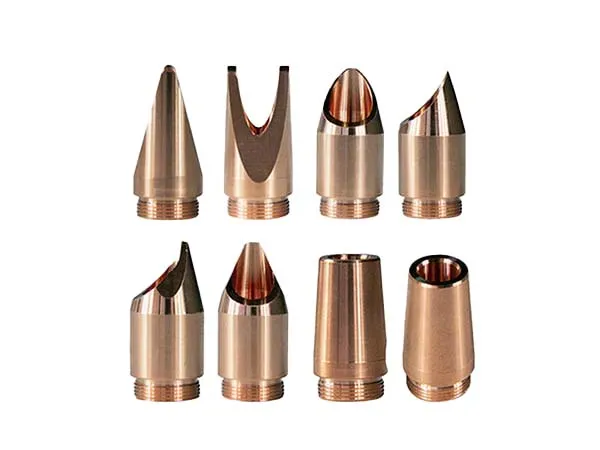
Copper nozzles
Made from high-purity red copper or tungsten-copper alloy, with electrical conductivity up to 98% IACS and a melting point of 1083℃. They can withstand high-temperature oxidation during continuous welding, extending their service life by over 30% compared to ordinary alloy nozzles.
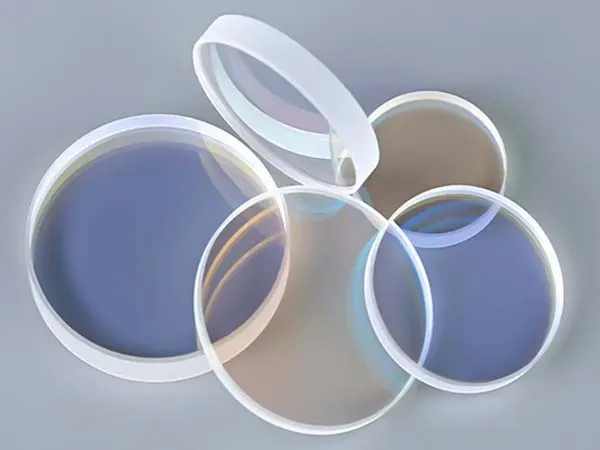
Protective lenses
Made from JGS1 quartz or ZnSe zinc selenide, with light transmittance ≥99.8% and laser damage threshold >15J/cm². They are suitable for high-power equipment above 2000W, reducing energy loss. Double-sided anti-reflective coating reduces reflectivity to below 0.2%, preventing secondary light pollution.
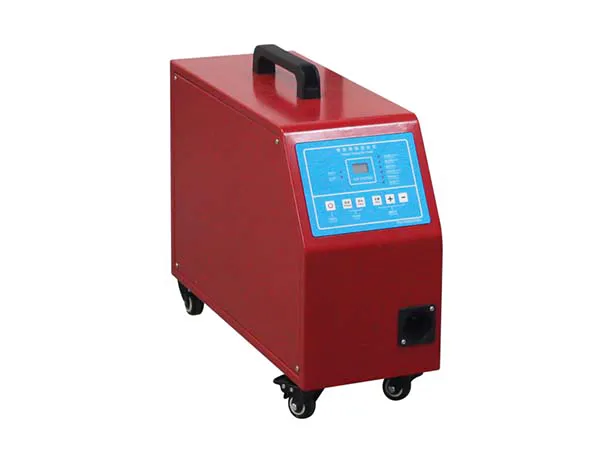
Wire feeder
Supports wire diameters from 0.8-1.6mm with stepless speed adjustment from 0-20m/min and an error of ±1%. It is compatible with various welding wire materials such as aluminum, stainless steel, and copper.
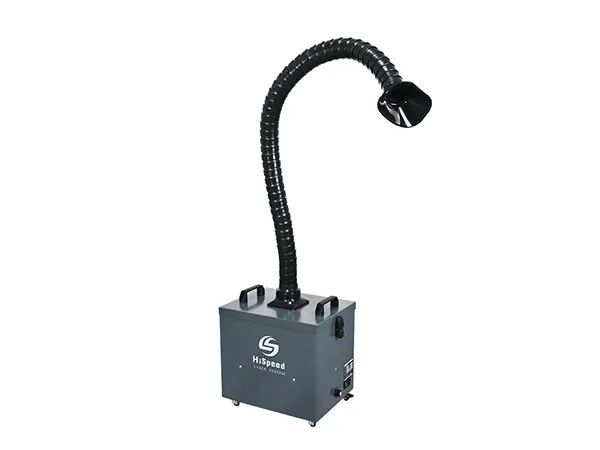 Fume Extractor
- Protective Lenses
- Copper Nozzles
- Welding Wire